


Do I need to test a contractor’s electrical tools and equipment if they’re using them on my premises?
It should be noted that testing is not an explicit legal requirement — the Regulations stipulate only that equipment is maintained so as to prevent danger. There is, nevertheless, general acknowledgement that evidence of routine maintenance and checking is one way of demonstrating compliance with this stipulation.
Also, there is no legal definition of “portable electrical equipment”. However, HSE guidance HSG107 Maintaining Portable Electrical Equipment describes it as:
“Equipment that is intended to be connected to a generator or a fixed installation by means of a flexible cable and either a plug and socket or a spur box, or similar means. This includes equipment that is either hand-held or hand-operated while connected to the supply, intended to be moved while connected to the supply, or likely to be moved while connected to the supply.
“Extension leads, plugs and sockets, and cord sets that supply portable equipment are classified as portable equipment because they operate in the same environment and are subject to the same use as the equipment they serve. Portable equipment also includes appliances which have been fixed for security purpose such as those in public areas of hotels and changing rooms, eg kettles, hairdryers, hand dryers, lamps etc. The electrical supply to the equipment is assumed to be at a voltage that can give a fatal electrical shock, ie more than 50 V ac or 120 V dc.”
PAT usually involves a visual inspection of the equipment and any flexible cables for good condition, and also where required, checking for things like electrical continuity, insulation, earthing and polarity. Any pass/ fail criteria will depend on the equipment being tested, and the frequency of inspections will usually be determined by the type of equipment and the location in which it is being used; office equipment which is largely static may be inspected less frequently than equipment which is routinely transported and used in different locations, for example.
There is no legal requirement for contractors to ensure that all tools and equipment are inspected before bringing onto a site of work. Nor is there any legal obligation on the client or premises manager to ensure third-party equipment is inspected either by themselves or the equipment owner.
However, the contractor, client or premises management organisation may well have internal company-wide policies on electrical safety which do include this requirement, so it is important to check, since although the legal requirement is only that they should be in a safe condition, there may be legitimate specific procedures which need to be followed.
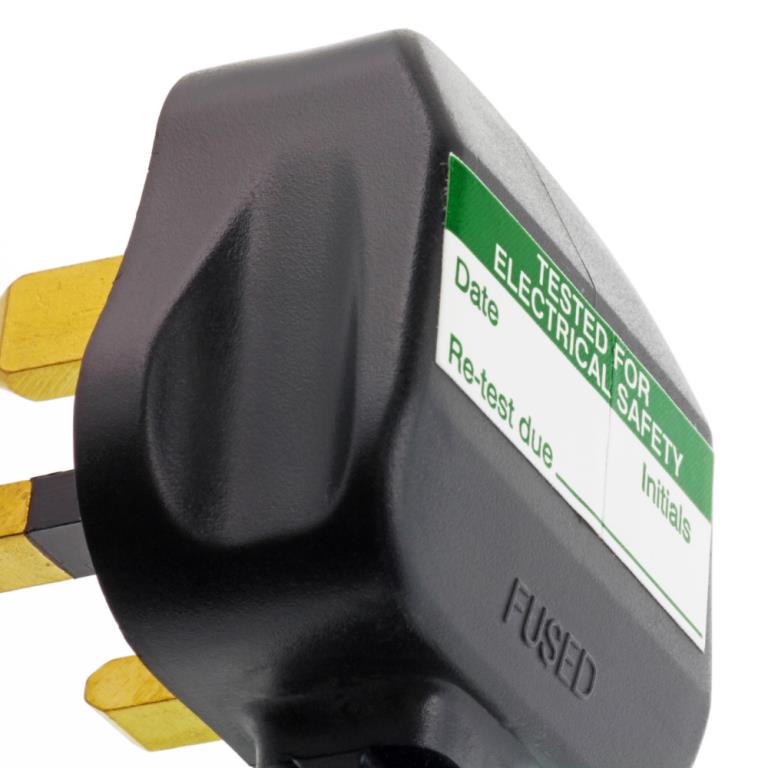
Many items of equipment will have stickers attached to them when testing takes place, but again this is principally for administrative purposes, and is not obligatory under the regulations. Having a sticker should not be taken as conclusive evidence that a piece of equipment is safe.
Last reviewed 17 December 2021