

What are the health and safety responsibilities that make it automatically unlawful to dismiss employees or to subject them to a detriment? Barrister Robert Spicer reports on a recent case.
Automatic unfair dismissal and health and safety
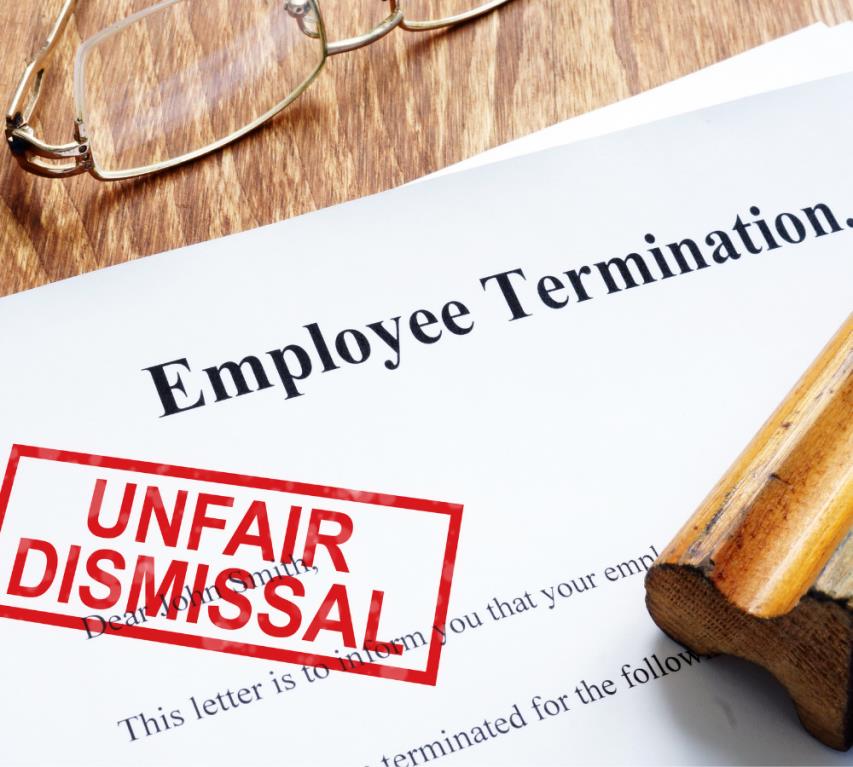
The concept of automatic unfair dismissal means, in summary, that it is automatically unlawful to dismiss employees, or to subject them to a detriment, for a number of specified reasons.
In relation to health and safety, these reasons include the following:
-
Employees designated with a specific health and safety duty under statute or by agreement with the employer, have a right not to be dismissed or subjected to detrimental treatment because they carry out or propose to carry out their health and safety duties. The way in which the designated employee carries out health and safety activities is also protected, so long as the representative did not act maliciously.
“Designated” means that the employer has instructed the employee to carry out specific activities in connection with preventing or reducing risks to health and safety. These activities must be more than their normal work duties. It is not enough, for the purposes of designation, to instruct employees that they must take responsibility for their own health and safety.
Case
This issue was considered in the case of Castano v London General Transport Services Ltd (2020). The facts, in summary, were that C was employed by LGTS as a bus operator. He was dismissed for misconduct. He had less than two years employment and could not claim ordinary unfair dismissal. He complained to an employment tribunal (ET) that he had been subjected to detriment and/or had been dismissed for health and safety reasons and had therefore been automatically unfairly dismissed.
C stated that there had been a background of his raising health and safety concerns with managers and making complaints about a specific controller. These had been ignored. C also stated that in March 2017 he refused to put passengers’ health and safety at risk by immediately responding to a text from the controller as he was driving a bus. Following this incident he was subjected to various detriments, including the withdrawal of his sick pay and cancelling his pre-booked leave to try and make him attend a disciplinary process.
Sections 44 and 100 of the Employment Rights Act 1996 provide protection for workers who have been designated by an employer to carry out health and safety activities. C relied on the fact that he was a bus operator who held a Public Carrying Vehicle (PCV) licence and therefore had responsibility for passengers, other motorists and road users. He therefore argued that he was being treated as a designated health and safety person. Alternatively, he argued that his workplace was the bus route which he drove. Since there was no designated health and safety representative on that route, he was the designated health and safety representative.
The ET rejected these arguments and struck out the claim as having no reasonable prospect of success. It made the following points.
-
C’s place of work was stated in his contract of employment as being the Putney bus garage, and not his bus route.
-
All employees have health and safety obligations in the workplace.
-
The legislative provision in the Act of 1996 was not intended to confer rights on all employees, but rather on specific individuals within the workplace.
-
There was a difference between having contractual obligations to carry out health and safety duties in the normal course of work and being designated by the employer to carry out activities in connection with preventing or reducing risk to health and safety, which was the specific status protected by the legislation.
C appealed to the Employment Appeal Tribunal (EAT). The appeal was dismissed. The EAT found as follows.
-
Although C’s contract of employment contained provisions related to health and safety, these simply imposed general obligations related to the workplace.
-
They did not designate an employee working according to those provisions as carrying out activities in connection with preventing or reducing risks to health and safety.
-
C’s place of work was clearly the depot where he was based and not the route which he drove.
-
The fact that bus operatives had some health and safety obligations as part of their duties did not mean that they had been designated to carry out a particular role. If C’s argument was correct, it would mean that all drivers would have been designated for the purposes of the 1996 Act, which they clearly were not.
Examples
Another example is the case of Sinclair v Trackwork Ltd (2021) where S was dismissed by his employer for upset and friction caused to his colleagues when he put a new safety procedure in place. S complained of automatically unfair dismissal in that the reason for his dismissal had been that, having been designated to carry out health and safety activities, he had carried out such activities. The employment tribunal rejected the complaint on the basis that the reason for his dismissal had been the overzealous way in which he had carried out his health and safety activities rather than the actual carrying out of those activities. This decision was reversed by the EAT, which made the following points.
-
Activities carried out as part of “designation” are protected, and the way in which those activities are carried out will not normally remove that protection.
-
Conduct which is wholly unreasonable, malicious or irrelevant to the activity, may result in loss of protection.
Summary
These cases illustrate the importance to employers of the significant health and safety protections under UK legislation. In relation to automatic unfair dismissal, there is no qualifying period of employment. Where a dismissal or other detriment is related to health and safety activities, employers should act with great care and should seek legal advice.
Last reviewed 24 March 2022