

Coronavirus: risks from goods delivered
This article is by RoSPA and is reproduced courtesy of Safety Groups UK.
How to assess the risks and apply appropriate control measures from goods delivered was the topic of a recent Q & A in the RoSPA H & S journal.
QUESTION
Our business has goods delivered to us on a regular basis. Employees are concerned that the Covid-19 virus could be present on the items being delivered. Is this possible and what should we be doing as part of Covid-19 secure operations?
ANSWER
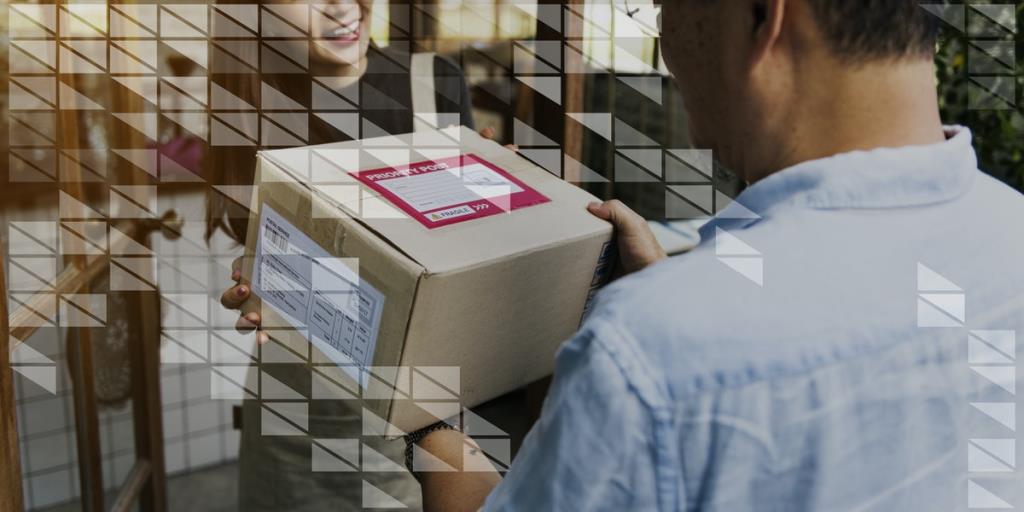
Many organisations, as part of everyday business, will either need to despatch or receive physical goods.
The transmission of Covid-19 is thought to occur mainly through respiratory droplets generated by coughing and sneezing, and through contact with contaminated surfaces.
Latest Government guidance states that “human coronaviruses can survive on inanimate objects and can remain viable for up to 5 days at temperatures of 22–25°C and relative humidity of 40–50%” and that “survival on environmental surfaces is also dependent on the surface type”.
As such there is a risk of transmission on goods being delivered to the organisation. This risk should be assessed in the usual way and appropriate control measures used to reduce the risk.
As part of this, organisations should ensure they understand their “goods-in streams” so as to:
- assess the vulnerability of the organisation in terms of goods entering the business
- understand the significance to the organisation of those goods so that deliveries may be prioritised if necessary.
The organisation may have numerous goods-in streams, ranging from large deliveries to single item couriers. Each should be identified and the goods delivery, transport, storage and use broken down to identify where contact transmission may occur.
Although the organisation may have a centralised process for receiving goods (eg postroom or goods depot), thought should also be given to other deliveries both authorised (eg one-off courier deliveries) and unauthorised (eg employees having deliveries made at work for personal items or even food).
It may be worth contacting the organisations that deliver goods to ascertain what measures they are introducing and what they would expect from customers receiving goods.
UK Government guidance objective is to “maintain social distancing and avoid surface transmission when goods enter and leave the site, especially in high volume situations”. General secure guidance recommendations include:
- revising pick-up and drop-off collection points, procedures, signage and markings (eg creating “no contact” drop-off zones)
- minimising contact by using non-contact deliveries and electronic payment/document exchange, etc
- considering methods to reduce frequency of deliveries (eg increasing bulk deliveries)
- having single workers load or unload vehicles or use same pair working
- encouraging drivers to stay in their vehicles where possible, although drivers or riders should be able to safely access welfare facilities when required.
Where the organisation has multiple delivery points, consideration should be given to rationalising these and having minimum dedicated drop-off zones.
Other measures include:
- prohibiting uncontrolled personal deliveries by employees
- ensuring regular cleaning of reusable delivery boxes and loading equipment
where possible, extending the time frames before the goods are moved or used to allow any virus to die off naturally.
____________________________________

This article by RoSPA is reproduced courtesy of Safety Groups UK.
Find out further information on RoSPA membership.
Dislaimer
This article is for informational/educational purposes only. Nothing in the material provided constitutes legal or professional advice. NI Safety Group (and RoSPA) do not accept any liability whatsoever for the contents, usage or onward transmission including any loss or damage howsoever arising out of the use or reliance on its contents. In providing this information NI Safety Group (and RoSPA) are not acting in an advisory capacity or as a health and safety consultants and it remains your responsibility to ensure that you are meeting your legal obligations.
The material provided is protected by copyright. It may not be copied, reproduced, republished, downloaded, posted, broadcast or transmitted in any way except for your own personal, non-commercial use. Prior written consent of NI Safety Group and the author must be obtained for any other use of material.